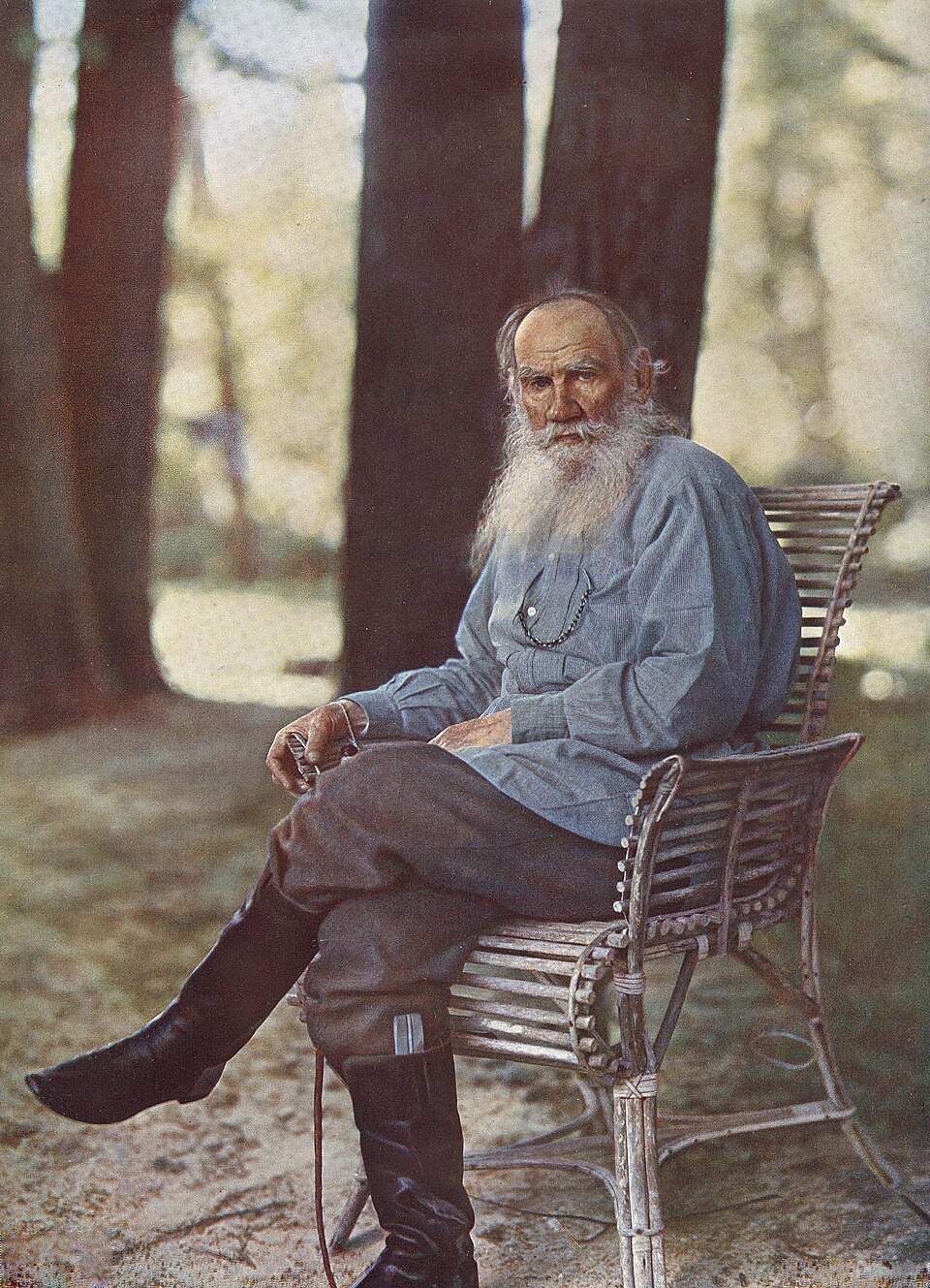
Tolstoy’s Voice
Thomas Edison sent Tolstoy a phonograph as a gift early in 1908, and Tolstoy spoke two of the Circle’s weekly readings into it: The Thief’s Son and The Power of Childhood. No manuscript of either exists, the Jubilee edition notes, because he spoke them into the phonograph. Both recordings survive. So does a disc he recorded in English in October 1909, of thoughts the Circle also prints.
Under each recording is the Circle’s text, Tolstoy’s Russian and our English side by side. What he says may differ from the printed text in places: the recordings have not yet been checked against it word for word.
The Power of Childhood Сила детства
— Убить!.. Застрелить!.. Сейчас застрелить мерзавца!.. Убить!.. Горло перерезать убийце!.. Убить, убить!.. — кричали мужские, женские голоса толпы.
“Kill him!… Shoot him!… Shoot the scoundrel right now!… Kill him!… Cut the murderer’s throat!… Kill him, kill him!…” shouted the voices of the crowd, men’s and women’s.
Огромная толпа народа вела по улице связанного человека. Человек этот, высокий, прямой, шел твердым шагом, высоко поднимая голову. На красивом, мужественном лице его было выражение презрения и злобы к окружающим его людям.
A huge crowd of people was leading a bound man down the street. This man, tall and erect, walked with a firm step, holding his head high. On his handsome, manly face was an expression of contempt and malice toward the people around him.
Это был один из тех людей, которые, в войне народа против власти, воюют на стороне власти. Его схватили теперь и вели на казнь.
He was one of those men who, in a war of the people against the government, fight on the side of the government. He had been seized now and was being led to his execution.
«Что же делать! Не всегда сила на нашей стороне. Что же делать? Теперь их власть. Умереть так умереть, видно так надо», — думал этот человек и, пожимая плечами, холодно улыбнулся на крики, которые продолжались в толпе.
“Well, what can be done! Power is not always on our side. What can be done? Now they rule. If I am to die, then I die; evidently it must be so,” this man thought, and, shrugging his shoulders, smiled coldly at the shouts that went on in the crowd.
— Это городовой, он еще утром стрелял по нас! — кричали в толпе.
“He’s a policeman; he was shooting at us just this morning!” voices shouted in the crowd.
Но толпа не останавливалась, и его вели дальше. Когда же пришли на ту улицу, где по мостовой лежали вчерашние не убранные еще тела убитых войсками, толпа освирепела.
But the crowd did not stop, and he was led on. When they came to the street where the bodies of those the troops had killed the day before still lay on the pavement, not yet taken away, the crowd grew savage.
— Нечего оттягивать! Сейчас тут и застрелить негодяя, куда еще водить его? — кричали люди.
“No more putting it off! Shoot the villain right here and now; why lead him any farther?” people shouted.
Пленный хмурился и только выше поднимал голову. Он, казалось, ненавидел толпу еще более, чем толпа ненавидела его.
The prisoner frowned and only held his head higher. He seemed to hate the crowd even more than the crowd hated him.
— Перебить всех! Шпионов! Царей! Попов! И этих мерзавцев! Убить, убить сейчас! — взвизгивали женские голоса.
“Kill them all! The spies! The kings! The priests! And these scoundrels! Kill them, kill them now!” women’s voices shrieked.
Но руководители толпы решили довести его до площади и там разделаться с ним.
But the leaders of the crowd decided to take him as far as the square and deal with him there.
До площади уже было недалеко, когда в минуту затишья в задних рядах толпы послышался плачущий детский голосок.
The square was not far off now when, in a moment of quiet, a child’s tearful little voice was heard in the back rows of the crowd.
— Батя! Батя! — всхлипывая, кричал шестилетний мальчик, втискиваясь в толпу, чтобы добраться до пленного.
“Daddy! Daddy!” cried a six-year-old boy, sobbing, as he squeezed into the crowd to get to the prisoner.
— Батя! Что они с тобой делают? Постой, постой, возьми меня, возьми!..
“Daddy! What are they doing to you? Wait, wait, take me, take me!…”
Крики остановились в той стороне толпы, с которой шел ребенок, и толпа, расступаясь перед ним, как перед силой, пропускала ребенка всё ближе и ближе к отцу.
The shouting stopped on the side of the crowd the child was coming from, and the crowd, parting before him as before a power, let the child through, closer and closer to his father.
— А какой миленький! — сказала одна женщина.
“What a little darling!” said one woman.
— Тебе кого? — сказала другая, нагибаясь к мальчику.
“Who is it you want?” said another, bending down to the boy.
— Батю! Пустите меня к бате! — пищал мальчик.
“Daddy! Let me go to Daddy!” the boy piped.
— Тебе сколько лет, мальчик?
“How old are you, little boy?”
— Что вы с батей хотите делать? — отвечал мальчик.
“What do you want to do to Daddy?” the boy answered.
— Иди домой, мальчик, иди к матери, — сказал мальчику один из мужчин.
“Go home, little boy, go to your mother,” one of the men said to the boy.
Пленный уже слышал голос мальчика, и слышал, что говорили ему. Лицо его стало еще мрачнее.
The prisoner had already heard the boy’s voice, and heard what was being said to him. His face grew still darker.
— У него нет матери! — крикнул он на слова того, кто отсылал ребенка к матери.
“He has no mother!” he shouted in answer to the man who was sending the child to his mother.
Всё ближе и ближе протискиваясь в толпе, мальчик добрался до отца и полез к нему на руки.
Pushing his way closer and closer through the crowd, the boy reached his father and climbed up into his arms.
В толпе кричали всё то же: «Убить! Повесить! Застрелить мерзавца!»
In the crowd they kept shouting the same thing: “Kill him! Hang him! Shoot the scoundrel!”
— Зачем ты из дома ушел? — сказал отец мальчику.
“Why did you leave home?” the father said to the boy.
— Что они с тобой хотят делать? — говорил мальчик.
“What do they want to do to you?” the boy was saying.
— Ты вот что сделай, — сказал отец.
“Here’s what you do,” said the father.
— Ну?
“Well?”
— Знаешь Катюшу?
“You know Katyusha?”
— Соседку? Как не знать.
“The neighbor? Of course I know her.”
— Так вот, пойди к ней и там побудь. А я... я приду.
“Well then, go to her and stay there a while. And I… I’ll come.”
— Без тебя не пойду. — сказал мальчик и заплакал.
“I won’t go without you,” said the boy, and began to cry.
— Отчего не пойдешь?
“Why won’t you go?”
— Они прибьют тебя.
“They’ll kill you.”
— Нет же, они ничего, они так.
“No, no, they’re all right; they don’t mean it.”
И пленный спустил с рук мальчика и подошел к тому человеку, который распоряжался в толпе.
And the prisoner let the boy down from his arms and went up to the man who was giving orders in the crowd.
— Послушайте, — сказал он, — убивайте меня, как и где хотите, но только не при нем, — он показал на мальчика. — Развяжите меня на две минуты и держите за руку, а я скажу ему, что мы с вами гуляем, что вы мне приятель, и он уйдет. А тогда... тогда убивайте, как хотите.
“Listen,” he said, “kill me however and wherever you like, only not in front of him.” He pointed to the boy. “Untie me for two minutes and hold me by the arm, and I will tell him that you and I are out for a walk, that you are my friend, and he will go away. And then… then kill me as you like.”
Руководитель согласился.
The leader agreed.
Тогда пленный взял опять мальчика на руки и сказал:
Then the prisoner took the boy in his arms again and said:
— Будь умник, пойди к Кате.
“Be a good boy, go to Katya.”
— А ты что же?
“And what about you?”
— А ты видишь, я гуляю вот с этим приятелем, мы пройдем еще немного, а ты иди, а я приду. Иди же, будь умник.
“Well, you see, I’m out for a walk with this friend here; we’ll walk a little farther, and you go, and I’ll come. Go on now, be a good boy.”
Мальчик уставился на отца, нагнул головку на одну сторону, потом на другую и задумался.
The boy stared at his father, tilted his little head to one side, then to the other, and fell to thinking.
— Иди, милый, я приду.
“Go, dear, I’ll come.”
— Придешь?
“You’ll come?”
И ребенок послушался. Одна женщина вывела его из толпы.
And the child obeyed. A woman led him out of the crowd.
Когда ребенок скрылся, пленный сказал:
When the child was out of sight, the prisoner said:
— Теперь я готов, убивайте меня.
“Now I am ready; kill me.”
И тут случилось что-то совсем непонятное, неожиданное. Какой-то один и тот же дух проснулся во всех этих за минуту жестоких, безжалостных, ненавидящих людях, и одна женщина сказала:
And then something happened that was quite incomprehensible and unexpected. Some spirit, one and the same, awoke in all these people who a minute before had been cruel, pitiless, and full of hate, and one woman said:
— А знаете что. Пустить бы его.
“You know what. We ought to let him go.”
— И то, бог с ним, — сказал еще кто-то. — Отпустить.
“True enough, God be with him,” someone else said. “Set him free.”
— Отпустить, отпустить! — загремела толпа.
“Set him free, set him free!” the crowd thundered.
И гордый, безжалостный человек, за минуту ненавидевший толпу, зарыдал, закрыл лицо руками и, как виноватый, выбежал из толпы, и никто не остановил его.
And the proud, pitiless man, who a minute before had hated the crowd, burst into sobs, covered his face with his hands, and, like a guilty man, ran out of the crowd, and no one stopped him.
The Thief’s Son Воров сын
Собрался в одном городе суд присяжных. Были присяжными и крестьяне, и дворяне, и купцы. Старшиной присяжных был почтенный купец Иван Акимович Белов. Все купца этого уважали за добрую жизнь: и честно вел дела, никого не обманывал, не обсчитывал и людям помогал. Был он старик, лет под 70. Собрались присяжные, присягнули, сели по местам, и привели к ним подсудимого, конокрада, за то, что он у мужика лошадь угнал. Только хотели начать судить, Иван Акимович встал и говорит судье: «Простите меня, господин судья, я не могу судить».
In a certain town a jury met. The jurors were peasants, and gentry, and merchants. The foreman of the jury was a worthy merchant, Ivan Akimovich Belov. Everyone respected this merchant for his good life: he dealt honestly, he cheated no one, he shortchanged no one, and he helped people. He was an old man, close to 70. The jurors gathered, took the oath, and sat down in their places, and they brought before them the accused, a horse thief, for having driven off a peasant’s horse. They were just about to begin judging when Ivan Akimovich stood up and said to the judge: “Forgive me, Your Honor, I cannot judge.”
Удивился судья: «Как, говорит, почему?»
The judge was surprised. “How so?” he said. “Why?”
— Да так, не могу. Отпустите меня.
“I just cannot. Let me go.”
И вдруг задрожал у Ивана Акимовича голос, и заплакал он. Заплакал, заплакал так, что и говорить не может. Потом оправился и говорит судье:
And suddenly Ivan Akimovich’s voice trembled, and he began to cry. He cried and cried, so that he could not even speak. Then he recovered himself and said to the judge:
— Не могу я, господин судья, судить потому, что я и отец мой, может быть, много хуже этого вора; как же мне судить такого же, как я. Не могу, отпустите, прошу вас.
“I cannot judge, Your Honor, because I and my father may be much worse than this thief; how then can I judge someone just the same as I am? I cannot; let me go, I beg you.”
Отпустил судья Ивана Акимовича и потом вечером позвал его к себе и стал спрашивать: «Отчего вы, говорит, отказываетесь от суда?»
The judge let Ivan Akimovich go, and then in the evening he called him to his house and began to ask him: “Why is it,” he said, “that you refuse to judge?”
— А вот отчего, — сказал Иван Акимович и рассказал судье про себя такую историю.
“Here is why,” said Ivan Akimovich, and he told the judge this story about himself.
— Вы, говорит, думаете, что я сын купца и что я родился в вашем городе. Это неправда. Я сын крестьянина, отец мой был крестьянином, первый вор в округе, и помер в остроге. Человек он был добрый, да только пьяный, и в пьяном виде и мать мою бил, и буянил, и на всякое дурное дело был готов, а потом сам же каялся. Раз он и меня с собой вместе на воровство повел. И этим самым разом мое счастье сделалось.
“You think,” he said, “that I am a merchant’s son and that I was born in your town. That isn’t true. I am a peasant’s son; my father was a peasant, the biggest thief in those parts, and he died in jail. He was a kind man, only he drank, and when he was drunk he would beat my mother, and brawl, and he was ready for any bad deed, and then afterward he would repent of it himself. One time he took me, too, along with him to steal. And that very time was the making of my good fortune.
— Было дело так. Был мой отец в компании с ворами в кабаке, и стали они говорить, где бы им поразжиться. А мой отец и говорит им: «Вот что, ребята. Вы знаете, говорит, купца Белова амбар, чтó на улицу выходит. Так вот в амбаре этом добра сметы нет. Только забраться туда мудрено. А вот я придумал. А придумал я вот что. Есть в этом амбаре оконце, только высоко да и тесно, большому человеку не пролезть. Так я вот что вздумал. Есть, говорит, у меня парнишка, ловчак мальчишка, — это про меня значит, — так мы, говорит, возьмем его с собою, обвяжем его веревкой, подсодим к окну, он влезет, спустим его на веревке, а другую веревку ему в руки дадим, а на эту самую веревку будет он нам добро из амбара навязывать, а мы будем вытягивать. А когда наберем сколько надобно, мы его назад вытащим».
“This is how it was. My father was in a tavern in company with some thieves, and they began talking about where they might make a haul. And my father says to them: ‘Look here, lads. You know,’ he says, ‘merchant Belov’s storehouse, the one that fronts on the street. Well, there’s no counting the goods in that storehouse. Only it’s tricky getting in there. But I’ve thought of a way. And here’s the way I’ve thought of. There’s a little window in that storehouse, only it’s high up, and narrow besides; a grown man can’t squeeze through. So here’s what I’ve hit on. I’ve got,’ he says, ‘a youngster, a nimble little boy’ — that meant me — ‘so we’ll take him with us,’ he says, ‘tie a rope around him, boost him up to the window, he’ll climb in, we’ll let him down on the rope, and we’ll give him another rope in his hands, and on that very rope he’ll tie the goods from the storehouse for us, and we’ll pull them up. And when we’ve got as much as we need, we’ll haul him back out.’
— И полюбилось это ворам, и говорят: «Ну, что ж, веди сынишку».
“And the thieves liked the idea, and they say: ‘Well, all right, bring your boy.’
— Вот пришел отец домой, кличет меня. Мать говорит: «На что тебе его?» — «Значит, надо, коли зову». Мать говорит: «Он на улице». — «Зови его». Мать знает, что, когда он пьяный, с ним говорить нельзя, исколотит. Побежала за мной, кликнула меня. И говорит мне отец: «Ванька! ты лазить горазд?» — Я куды хошь влезу. — «Ну, говорит, идем со мной». Мать стала было отговаривать, он на нее замахнулся, она замолчала. Взял меня отец, одел и повел с собою. Повел с собою, привел в кабак, дали мне чаю с сахаром и закуски, посидели мы до вечера. Когда смерклось, пошли все — трое всех было — и меня взяли.
“So my father came home and calls for me. My mother says, ‘What do you want him for?’ ‘I need him, if I’m calling him.’ My mother says, ‘He’s out in the street.’ ‘Call him.’ My mother knows that when he’s drunk there’s no talking to him; he’ll beat her black and blue. She ran out after me and called me. And my father says to me, ‘Vanka! Are you any good at climbing?’ ‘I can get in anywhere you like.’ ‘Well,’ he says, ‘come along with me.’ My mother started to talk him out of it; he raised his hand to her, and she fell silent. My father took me, dressed me, and led me off with him. He led me off with him, brought me to the tavern; they gave me tea with sugar and something to eat, and we sat there till evening. When it grew dark, they all set out — there were three of them in all — and took me along.
— Пришли мы к этому самому дому купца Белова. Тотчас обвязали меня одной веревкой, а другую дали в руки и подняли. «Не боишься?» — говорят. — Чего бояться, я ничего не боюсь. — «Лезь в окно да смотри оттуда доставай что получше: меховое больше, да обвязывай веревкой, той, что в руках. Да привязывай, смотри, не на конец веревки, а в середину веревки, так, чтобы, когда мы вытащим, у тебя бы конец оставался. Понимаешь?» — говорят. — Как не понять, понимаю.
“We came to that very house of merchant Belov’s. Right away they tied one rope around me, put the other in my hands, and lifted me up. ‘Aren’t you scared?’ they say. ‘What’s there to be scared of? I’m not scared of anything.’ ‘Climb in at the window, and mind you fetch out the best things in there: furs, mostly, and tie them on with the rope, the one in your hands. And mind you tie them not to the end of the rope but to the middle of the rope, so that when we pull it out you’ll still have the end. Understand?’ they say. ‘Why wouldn’t I understand? I understand.’
— Вот подсадили они меня до оконца, пролез я в него, и стали они спускать меня по веревке. Стал я на твердое и тотчас стал ощупывать ручонками. Видать ничего не вижу, — темно, только щупаю. Как ощупаю что меховое, сейчас к веревке, не к концу, а к середине навязываю, а они тащат. Опять притягиваю веревку и опять навязываю. Штуки три таких чего-то вытащили, вытянули к себе всю веревку, значит — будет, и потянули меня опять кверху. Держусь я ручонками за веревку, а они тащат. Только потянули до половины: хлоп! оборвалась веревка, и упал я вниз. Хорошо, что попал на подушки, не зашибся.
“So they boosted me up to the little window, I squeezed through it, and they began letting me down on the rope. My feet touched something solid, and right away I began feeling about with my little hands. As for seeing, I can’t see a thing — it’s dark — I just feel. As soon as I feel something furry, straight to the rope with it: I tie it on, not to the end but to the middle, and they pull. I pull the rope back to me again and tie on again. They pulled out three or so of these things, whatever they were, drew the whole rope up to themselves, meaning that was enough, and started pulling me up again. I’m holding on to the rope with my little hands, and they’re pulling. They’d only pulled me halfway: snap! the rope broke, and down I fell. Good thing I landed on pillows; I didn’t hurt myself.
— Только в это самое время, как я после узнал, увидал их сторож, сделал тревогу, и бросились они бежать с наворованным.
“Only at that very moment, as I found out afterward, the watchman saw them and raised the alarm, and they took to their heels with what they had stolen.
— Они убежали, а я остался, ушли они. Лежу один в темноте, и страх на меня нашел, плачу и кричу: Мама, мама! мама, мама! И так я устал и от страха и от слез, да и ночь не спал, что и сам не слыхал, как заснул на подушках. Вдруг просыпаюсь, стоит против меня с фонарем этот самый купец Белов и с полицейским. Стал меня полицейский спрашивать, с кем я был. Я сказал — с отцом. — «А кто твой отец?» И стал я опять плакать. А Белов старик и говорит полицейскому: «Бог с ним. Ребенок — душа божья. Не годится ему на отца показывать, а что пропало, то пропало».
“They ran off, and I was left; they were gone. I’m lying alone in the dark, and fear has come over me; I’m crying and calling: Mama, Mama! Mama, Mama! And I was so worn out, from fright and from tears, and I’d had no sleep that night besides, that I never even noticed how I fell asleep on the pillows. Suddenly I wake up: there in front of me, with a lantern, stands that very merchant Belov, and a policeman with him. The policeman began asking me who I had been with. I said: with my father. ‘And who is your father?’ And I began to cry again. And old Belov says to the policeman: ‘Let him be. A child is a soul of God. It isn’t right for him to testify against his father; and what’s lost is lost.’
— Хороший был покойник, царство небесное. А уж старушка его еще жалостливее. Взяла она меня с собою в горницу, дала гостинцев, и перестал я плакать: ребенок, известно, всему радуется. Наутро спрашивает меня хозяйка: «Хочешь домой?» Я и не знаю, что сказать. Говорю: да, хочу. «А со мной оставаться хочешь?» — говорит. Я говорю: хочу. «Ну и оставайся».
“He was a good man, the departed, God rest his soul. And his old lady was more tender-hearted still. She took me with her into the parlor, gave me treats, and I stopped crying: a child, everyone knows, is glad of anything. Next morning the mistress asks me: ‘Do you want to go home?’ I don’t even know what to say. I say: yes, I do. ‘And do you want to stay with me?’ she says. I say: I do. ‘Well then, stay.’
— Так я и остался. И остался, остался, так и жил у них. И выправили они на меня бумаги, вроде подкидыша, приемышем сделали. Сначала жил мальчиком на посылках, потом, как стал подрастать, сделали они меня приказчиком, заведывал я в лавке. Должно быть, служил я недурно. Да и добрые люди были, так полюбили меня, что даже и дочь за меня замуж отдали. И сделали они меня заместо сына. А помер старик — всё имение мне и досталось.
“So I stayed. I stayed and stayed, and so I lived on with them. And they got papers made out for me, as for a foundling, and made me their adopted child. At first I lived there as an errand boy; then, as I began to grow up, they made me a clerk, and I was in charge of the shop. I must have served them not too badly. And they were kind people besides; they grew so fond of me that they even gave me their daughter in marriage. And they made me a son to them. And when the old man died, all the property came to me.
Так вот кто я такой. И сам вор и вора сын; как же мне судить людей. Да и не христианское это дело, господин судья. Нам всех людей прощать и любить надо, а если он, вор, ошибся, то его не казнить, а пожалеть надо. Помните, как Христос сказал.
“So that is who I am. A thief myself, and a thief’s son; how can I judge people? And besides, it isn’t a Christian thing to do, Your Honor. We must forgive and love all people, and if he, the thief, has made a mistake, we must not punish him but pity him. Remember what Christ said.”
Так сказал Иван Акимович.
So said Ivan Akimovich.
И перестал судья спрашивать и задумался сам о том, можно ли по христианскому закону судить людей.
And the judge stopped asking questions, and himself fell to thinking about whether, by the Christian law, one may judge people.
Thoughts from For Every Day Мысли из книги „На каждый день“
That the object of life is self-perfection, the perfection of all immortal souls, that this is the only object of my life, is seen to be correct by the fact alone that every other object is essentially a new object. Therefore, the question whether thou hast done what thou shouldst have done is of immense importance, for the only meaning of thy life is in doing in this short term allowed thee, that which is desired of thee by He who or That which has sent thee into life. Art thou doing the right thing?
As others have heard it: the words “a new object” are uncertain, and the transcription has not yet been checked against the recording.The Circle prints these words as two thoughts:
November 23 · unsigned, Tolstoy’s own
То, что совершенствование нашей души есть единственная цель нашей жизни, справедливо уже потому, что всякая другая цель, в виду смерти, бессмысленна.
That the perfecting of our soul is the only aim of our life is true if only because every other aim, in the face of death, is senseless.
November 17 · signed The Talmud
То ли ты делал, что тебе нужно делать — получает огромную важность, потому что единственный смысл жизни твоей только в том, то ли ты делаешь в этот короткий, данный тебе срок жизни, то ли делаешь, чего хочет от тебя тот, кто послал тебя в жизнь?
Whether you were doing what you ought to do takes on enormous importance, because the one meaning of your life lies only in this: are you doing, in the short span of life given you, what is wanted of you by the one who sent you into life?
Where the recordings come from
The Power of Childhood was recorded on April 19, 1908, and The Thief’s Son in February 1908, on wax cylinders at Yasnaya Polyana; our copies are from the online library imwerden.de. The English disc was recorded by the Gramophone Company at Yasnaya Polyana on October 31, 1909 (catalogue number 1412); our copy is from Wikimedia Commons. The New York Times reported Edison’s gift on February 21, 1908. The cylinders Edison’s own men recorded at Yasnaya Polyana in December 1908 were most likely lost in a fire at his works in 1914, in the view of the State Tolstoy Museum.
All three recordings are in the public domain.